
If you’ve ever gone grocery shopping and then looked in your fridge the next day thinking, “What am I supposed to make for dinner?” you know how frustrating that is. You just spent time and money buying food, and now you’re trying to figure out a meal when everyone is already hungry.
This is why I like to choose a few dinners before I shop. With two kids and everything we have going on during the week, I need to know which nights I have time to cook and which nights we’re having leftovers or something easy. Then I can buy what we actually need for those meals.
You can keep this really simple. Even choosing two or three dinners gives you a place to start. Here’s how I look at our week and put that plan together.
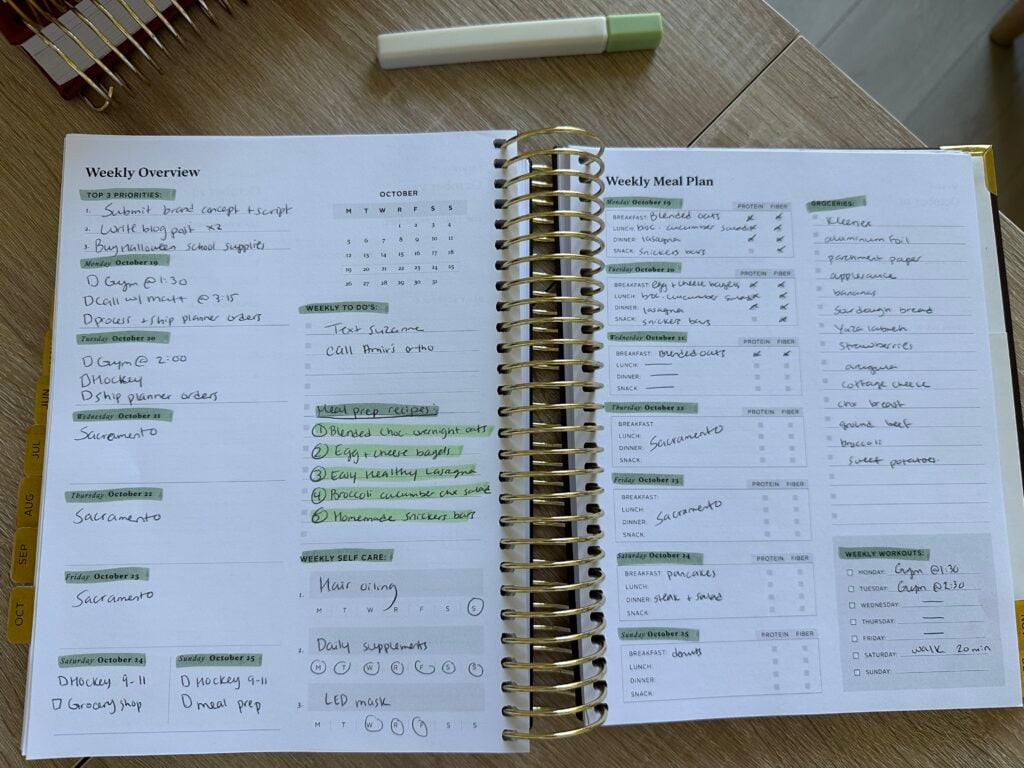
Start with the nights that need the easiest meals
It’s easy to pick up ingredients for a recipe that sounds delicious without checking when you’ll actually have time to cook it. A dinner that works on a quiet Saturday might be a lot to ask of yourself after a busy school day.
Before you start a grocery list, look at the week ahead. Which evenings will you be home with time to cook? When will you be walking through the door with hungry people? Is there a night when dinner needs to be ready before everyone heads back out?
Give those busiest nights the easiest meals. That might mean leftovers, sandwiches, or a rotisserie chicken with something simple on the side.
Look at the food you already have
Take a quick look through the fridge, freezer, and pantry before adding anything to your cart. Start with ingredients you want to use soon, then see what you already have to go with them.
If there’s broccoli in the fridge, chicken in the freezer, and rice in the pantry, you already have the beginning of a dinner. Put that meal on a night when you can prepare it and add any missing ingredients to your list.
As you choose meals, look for ingredients you can use more than once. Tortillas can become chicken wraps one night and bean and cheese quesadillas another. Cucumbers can go alongside dinner and into lunchboxes. If you’re buying spinach for a pasta recipe, think about whether you’ll also use it in eggs or sandwiches. This helps you decide how much to buy.
Choose a few dinners before writing the shopping list
You can start with just two or three meals. Add an easy option for a busy evening and decide where leftovers might fit.
For example, a simple plan for five evenings might look like this. Adjust the amounts for the people you’re feeding.
| Evening | What the schedule allows | Dinner |
| Monday | Time to cook | Pumpkin pasta with broccoli |
| Tuesday | A busy evening | Rotisserie chicken wraps with cucumber |
| Wednesday | Time to cook extra | Lebanese lentil soup with whole grain bread |
| Thursday | Home late | Leftover soup from Wednesday |
| Friday | An easy end to the week | Frozen pizza and a bagged salad |
Now the groceries have a place to go. The tortillas belong to Tuesday’s dinner. The lentils will cover Wednesday, with enough soup planned for Thursday. Friday’s easy meal is already on the list.
Think about how you’ll serve those meals to your kids, too. For chicken wraps, you can leave some chicken, cucumber, and tortilla pieces separate if that’s how they prefer to eat them. Put sauces and toppings on the table so everyone can add their own. Keep familiar meals in the rotation, especially on busy nights when trying a new recipe feels like too much.
If you want recipes for the two cooking nights, try my pumpkin pasta and Lebanese lentil soup.
Build your grocery list from those meals, checking off what you already have. Add breakfasts, lunches, snacks, and the things your household regularly uses. This gives you a reason for the food you’re buying and a starting point when dinner comes around.
Keep a dinner you can make when plans change
A meeting runs late. You get home tired. The dinner you planned suddenly sounds like too much work.
Keep the ingredients for one familiar, easy meal on hand. Think eggs with whole grain toast and fruit, pasta with jarred sauce and canned beans, or microwave rice with frozen vegetables and a protein you can prepare quickly.
Choose something your family will eat and that you know how to put together without looking up a new recipe. Write down the combination so you can remember it when you need it.
Having a backup gives you another option when the original plan stops working. You can move that dinner to a different night and use your judgment about what needs cooking or freezing first.
Give protein and fiber a place in the plan
When I’m putting meals together, I look for ways to include both protein and fiber. Chicken with rice and vegetables, eggs with whole grain toast, and lentil soup are all examples of how that can look.
Beans and lentils contribute both. Frozen vegetables, fruit, and whole grains give you more ways to add fiber throughout the week.
While you’re making the list, choose a lunch for yourself, too. If you want soup for lunch after soup night, plan to make enough for both. If you’re buying chicken and tortillas for dinner, you could get enough for a wrap the next day. Write down any extra ingredients you’ll need so your lunch is included in the shopping.
Keep your meals beside the rest of your week
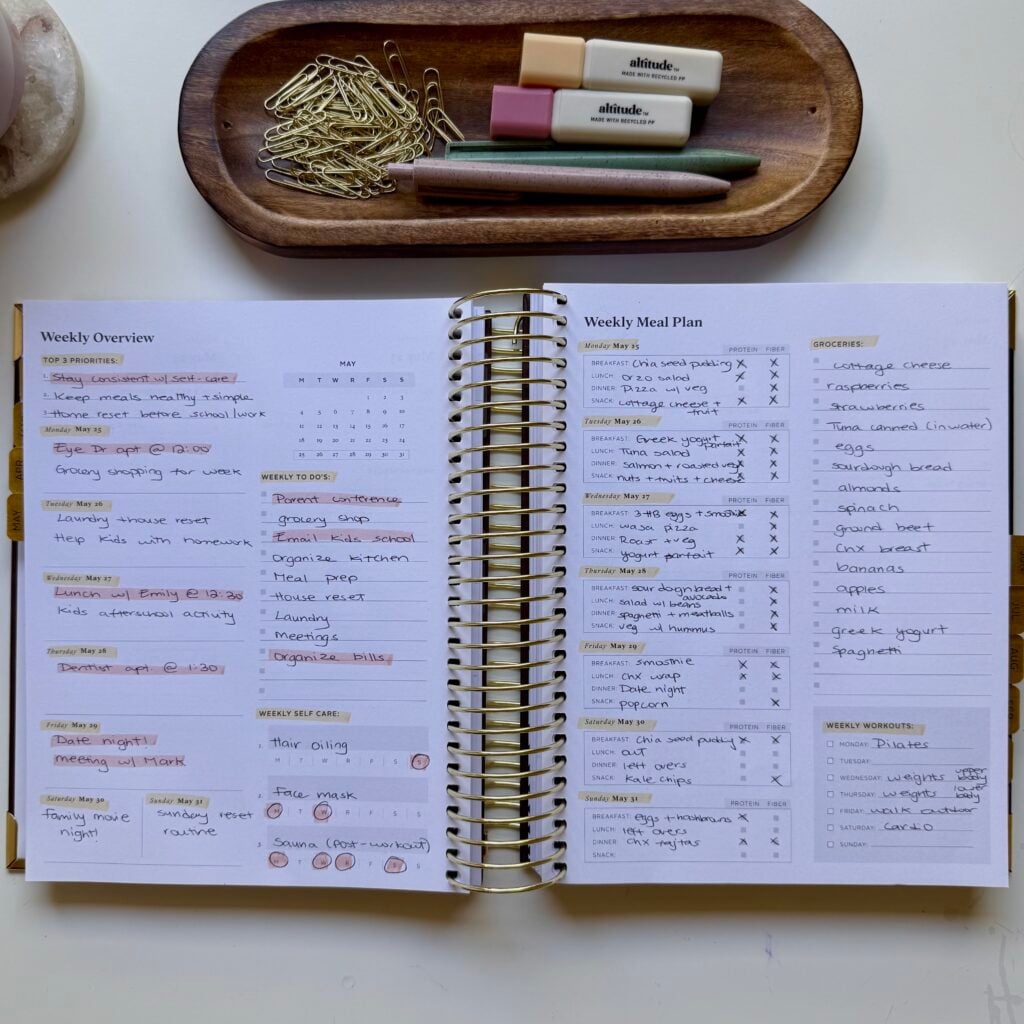
When I sit down to plan, I want to see the appointments and family commitments that will affect what we eat. A late pickup matters just as much to a dinner plan as the recipe does.
That connection is why I included weekly meal planning in my 2027 Daily Planner. You can plan breakfast, lunch, dinner, and snacks alongside the rest of your week, then use the daily pages to organize each weekday.
It also includes a grocery list, protein and fiber checkboxes, nutrition references, quick meal ideas, and emergency dinners for the nights when inspiration is running low.
You can try this approach today in your current planner or notebook. If you’d like that space for next year, the Daily Planner is $65 and dated January through December 2027, with a deep red croc-embossed cover.
Take a look inside the 2027 Daily Planner
Prefer a view of the whole week? The 2027 Weekly Planner has a perforated tear-out grocery list (this feature is exclusive to the Weekly); the Daily’s grocery list is not perforated.
Before your next grocery trip, choose one busy evening and decide what dinner will be. Check what you have, write down what’s missing, and build from there.
The next time someone asks what’s for dinner, you’ll have an answer before opening the fridge.