
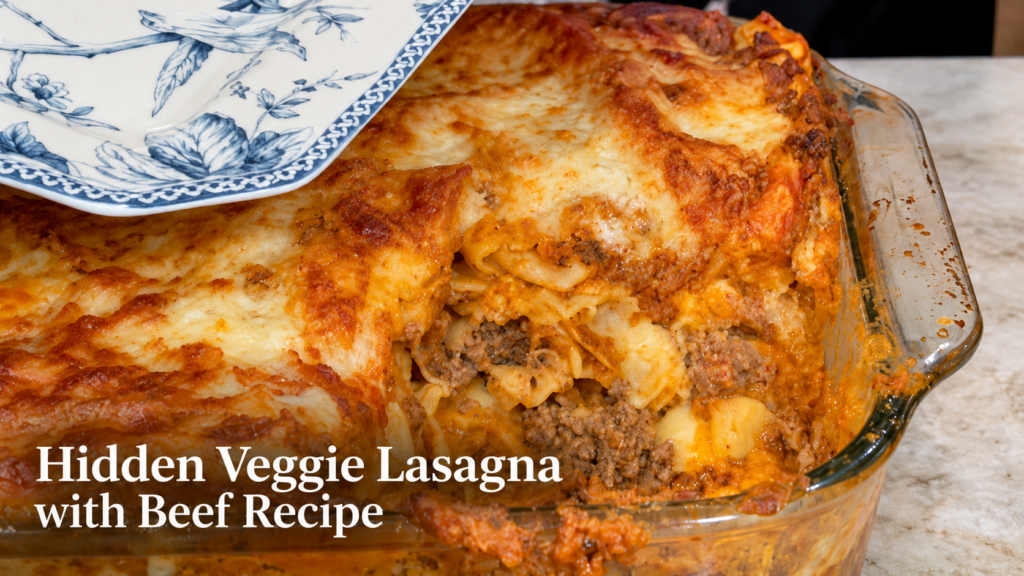
This hidden veggie lasagna has layers of ground beef, tender noodles, tomato sauce, and melted cheese, with carrots, zucchini, cauliflower, spinach, and white beans blended right into the sauce. It’s a satisfying, high-protein dinner made without ricotta or cottage cheese.
This recipe came together with what I had in the kitchen, including frozen spinach and cauliflower and a mozzarella-provolone blend. As a dietitian and a mom, I like adding vegetables and beans to meals we’re already making. Here, the vegetables become part of the sauce, while the beef and cheese stay in their own layers.
Jump to Recipe
Kitchen Tools and Equipment I Used
Here’s what I used to prep and bake this hidden veggie lasagna. I’ve linked everything below so you can find it easily.
- Cutting board: For prepping the vegetables, onion, and garlic.
- Chef’s knife: For chopping everything before cooking.
- Veggie chopper: Helpful for getting evenly sized pieces and speeding up prep.
- Viking deep skillet: For cooking the ground beef with the onion and garlic.
- Large blue pan: For cooking the vegetables before blending them into the sauce.
- High-speed blender: For blending the cooked vegetables, cannellini beans, and marinara into a smooth sauce.
- Mortar and pestle (similar): For grinding seasonings and mashing garlic.
- 9×13-inch baking dish: For layering and baking the lasagna.
- What I’m wearing: Feather-cuff pajamas.
Why You’ll Love This Hidden Veggie Lasagna
- The vegetables blend into the sauce. Cooking them until tender and blending them gives you a smoother sauce without large vegetable pieces.
- There are several sources of protein. Ground beef, white beans, mozzarella-provolone, and Parmesan all contribute.
- You can use frozen vegetables. Frozen cauliflower and spinach work well when you cook off or squeeze out their extra moisture.
- There’s no separate ricotta filling. The white beans add body to the sauce, and shredded cheese goes between the layers.
- It works for meal prep. Bake a pan for dinner and portion the leftovers for another meal.
If you’re looking for a version with a creamy cottage cheese filling, try my high-protein lasagna with cottage cheese.
Ingredients You’ll Need
You’ll find the measurements in the recipe card below. Here’s what each ingredient does and what to keep in mind.
Ground beef, onion, and garlic
Ground beef gives this lasagna its hearty texture. Cook it with the onion and garlic before assembling, and drain excess grease if needed.
Keep the cooked beef separate from the blender. You want a smooth vegetable sauce with crumbled beef between the noodles.
Carrots and zucchini
Carrots add a little sweetness, while zucchini softens easily and blends into the tomato sauce. Chop the carrots small so they cook through without leaving firm pieces in the blender.
Frozen cauliflower and spinach
Cook the cauliflower until you can easily mash it with a fork. Frozen spinach should be thawed and squeezed well before it goes into the vegetable mixture.
Spinach can give the sauce a darker or slightly greenish color. Use less or leave it out if you prefer a more traditional tomato color. The other vegetables and beans may still lighten the sauce, and you can stir in extra marinara after blending for more tomato flavor and a redder appearance.
Cannellini beans
Use half of a 15-ounce can of cannellini beans, drained and rinsed, about ¾ cup. They add creaminess, fiber, and plant protein while allowing the tomato flavor to come through. Blend them with the cooked vegetables and a portion of the marinara until smooth.
Marinara sauce
Start with one 24-ounce jar of marinara, and have some extra available to adjust the sauce after blending. Choose one you enjoy on its own, because its flavor will carry through the lasagna.
Blend just enough marinara with the vegetables and beans to get a smooth mixture, then stir in the remaining marinara. If you prefer a stronger tomato flavor or a redder sauce, add a little more marinara afterward. Taste before adding salt, since the sauce and cheeses already contribute salt.
Mozzarella-provolone and Parmesan
I used a mozzarella-provolone blend and Parmesan because those were the cheeses I had. The shredded blend melts between the layers, while Parmesan adds a savory finish.
There’s no ricotta, cottage cheese, or egg mixture to prepare.
Lasagna noodles
I used oven-ready lasagna noodles, but the recipe below includes instructions for regular dried noodles in case that’s what you have available. Cook regular noodles according to the package directions until al dente, then drain before assembling.
If you’re using oven-ready noodles like I did, skip the boiling step. These noodles absorb liquid as they bake, so cover them completely with sauce and follow the package directions for any additional liquid and baking time. Keep the lasagna covered with foil during the first part of baking to help the noodles soften.
How to Make Hidden Veggie Lasagna
1. Prepare the noodles and beef
Preheat the oven to 375°F and lightly grease a 9×13-inch baking dish.
For regular dried lasagna noodles: Cook according to the package directions until al dente. Drain and lay them separately on a lightly oiled baking sheet.
For oven-ready lasagna noodles: Skip the boiling step and use the noodles directly from the package. Check the package directions for any additional liquid needed in the sauce.
Meanwhile, sauté the onion in olive oil until softened. Add the ground beef and break it into small pieces as it cooks. Stir in the garlic and seasonings near the end. Cook the ground beef to 160°F, then set it aside.
2. Cook the vegetables until soft
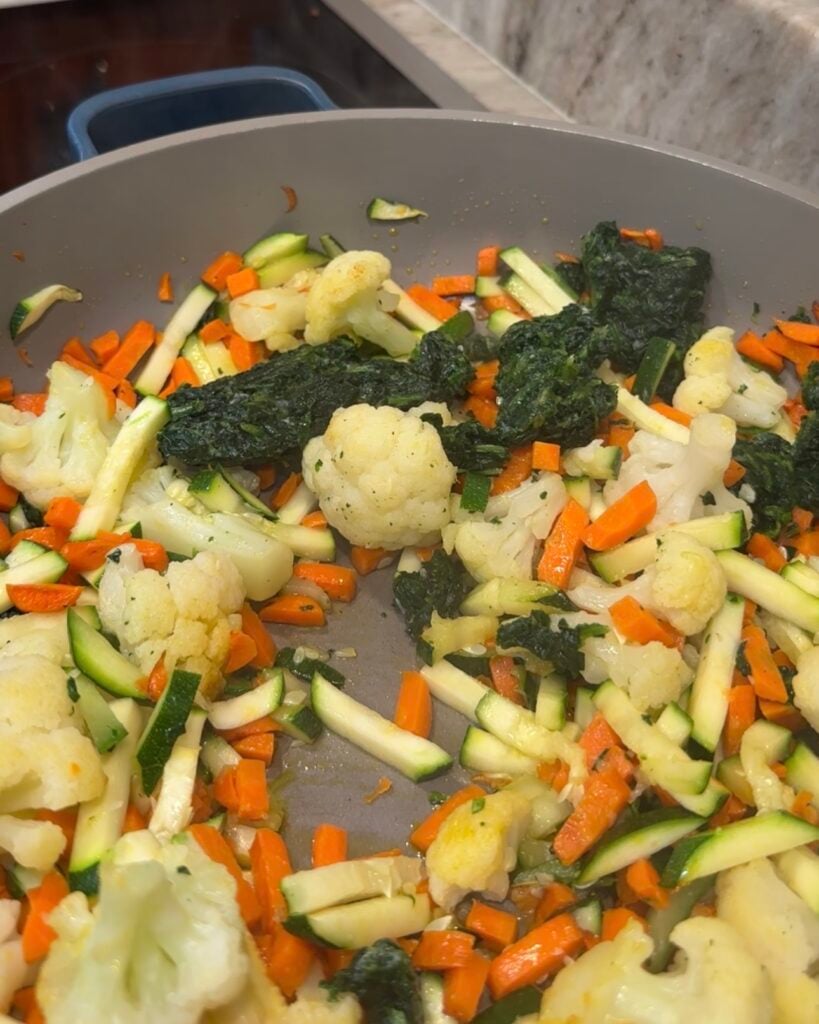
Heat the remaining olive oil in a large skillet. Add the finely chopped carrots and cook for a few minutes, then add the zucchini and frozen cauliflower.
Cover briefly to help the vegetables soften. If the pan is dry, add a small splash of water.
Once the carrots and cauliflower are tender, uncover the skillet and cook off the remaining liquid. Stir in the thawed, squeezed spinach and heat it through.
The vegetables should be soft, with no puddle of liquid in the pan.
3. Blend the vegetables, beans, and red sauce
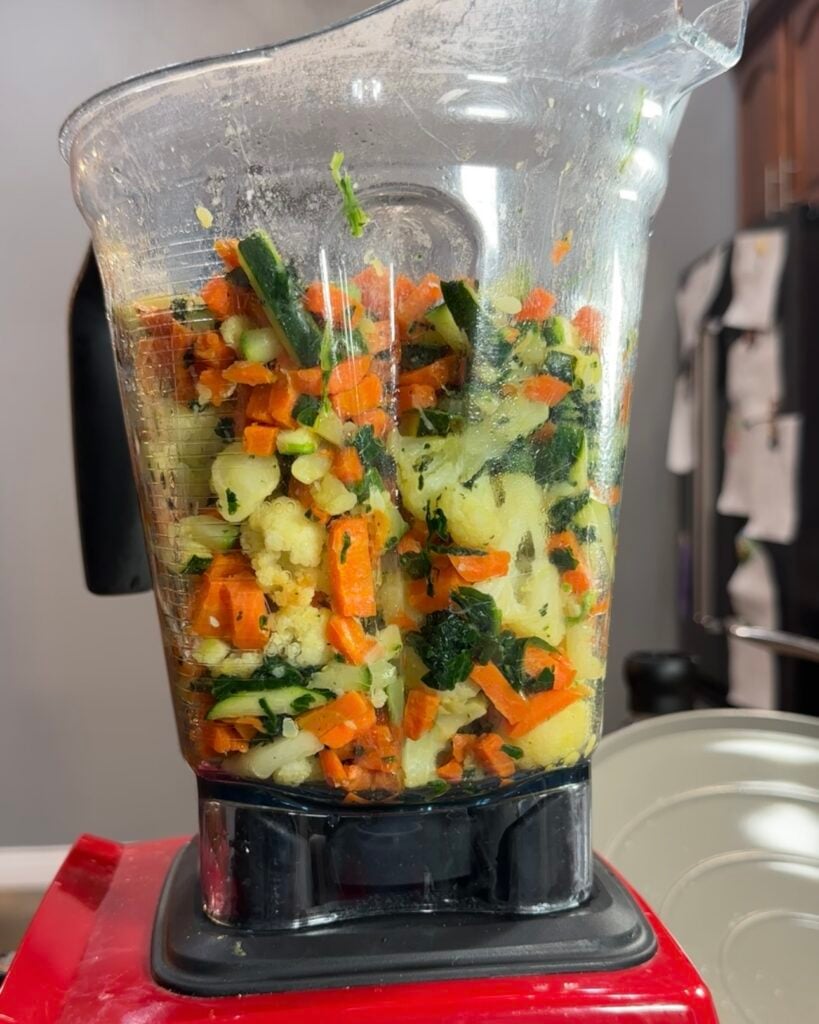
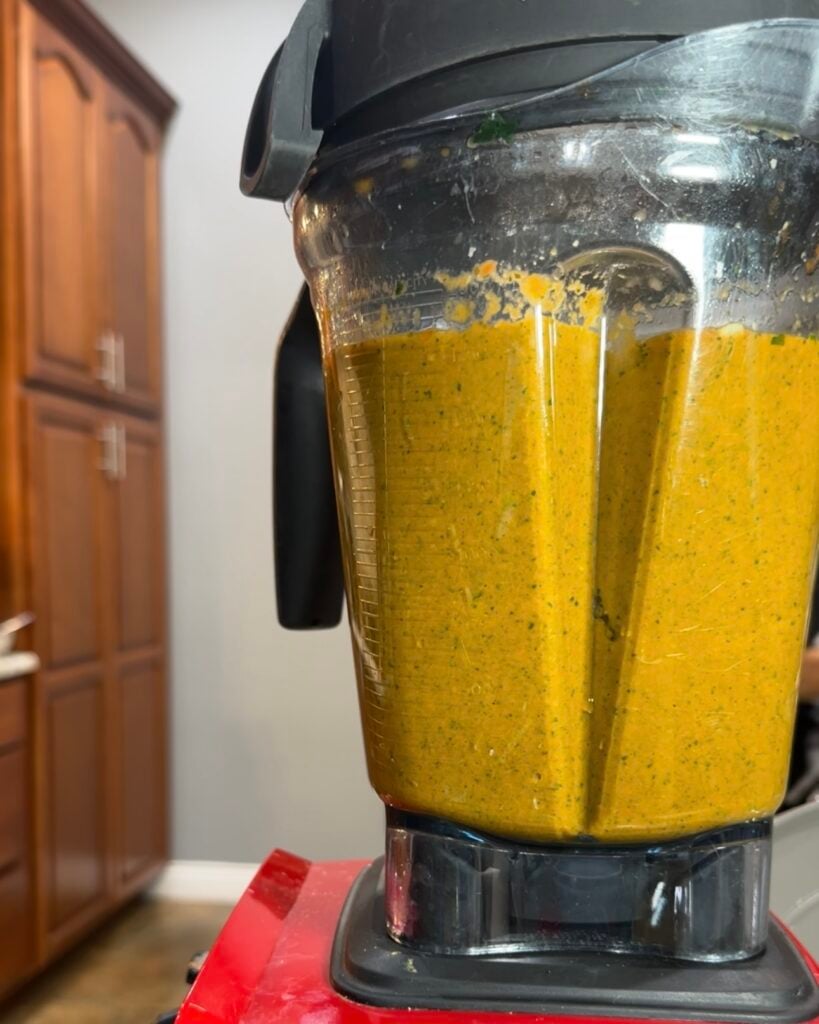
Add the cooked vegetables, drained and rinsed beans, and about 1 cup of marinara to a blender. Blend until smooth, adding a little more marinara from the jar if needed to help the mixture blend. Work in batches if necessary.
Pour the blended mixture into a large saucepan and stir in the remaining marinara from the jar.
Check the consistency before assembling. The sauce should spread easily and fall from a spoon rather than hold its shape like a thick purée. If it seems too thick, or you want more tomato flavor and a redder color, stir in extra marinara, about ¼ cup at a time. If it still needs loosening, add water a tablespoon or two at a time.
Already blended the whole jar with the vegetables? That works too. Simply stir in extra marinara afterward as needed.
For oven-ready noodles, keep the sauce a little looser and follow the package directions for any additional liquid. Avoid simmering it down into a thick paste.
Follow your blender’s instructions for warm ingredients and venting. Never blend hot ingredients in a sealed personal blender. You can also use an immersion blender in a deep saucepan.
4. Assemble two noodle layers
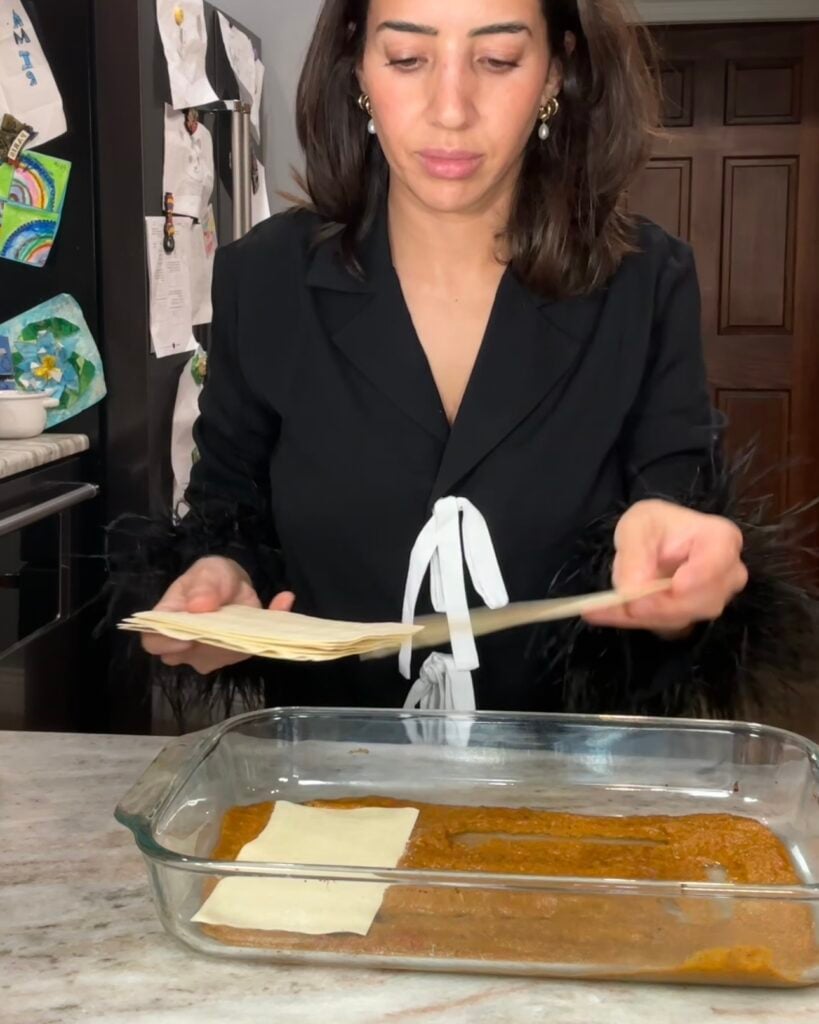
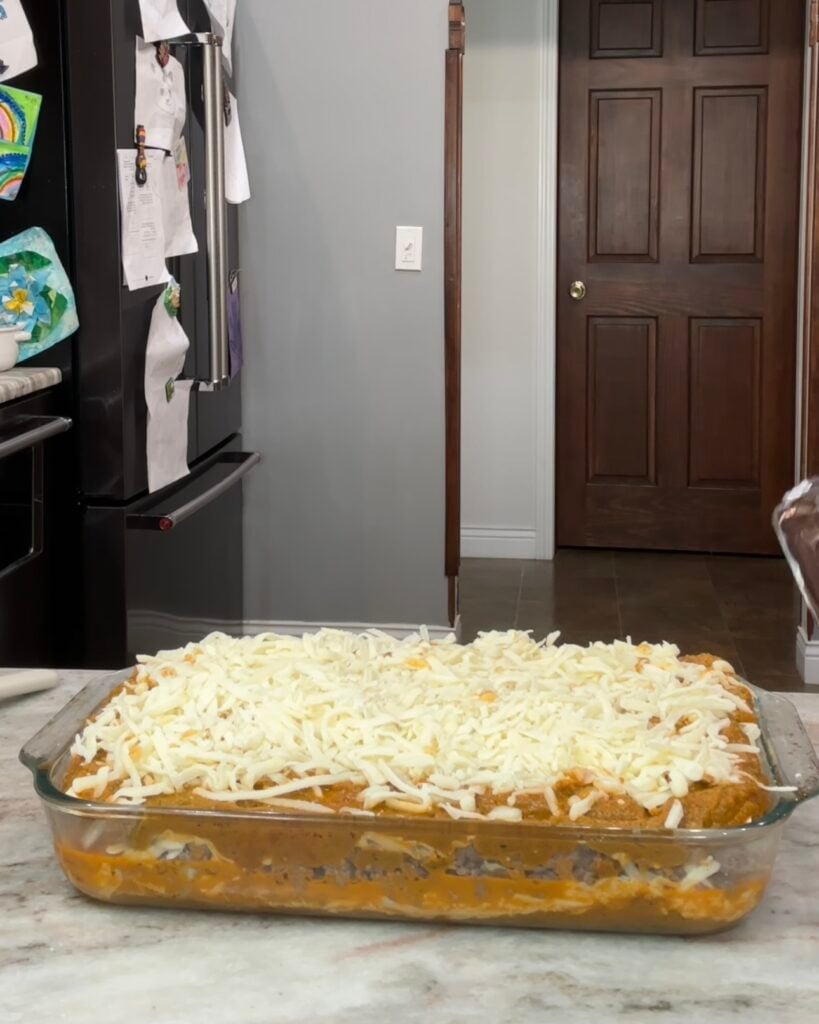
Start with a thin layer of sauce on the bottom of the baking dish.
Then assemble in this order:
- First layer: Noodles, half the beef, half the remaining sauce, half the mozzarella-provolone, and half the Parmesan.
- Second layer: Noodles, the remaining beef, the remaining sauce, and the remaining cheeses.
That’s it. You’ll have two layers of noodles, with sauce and cheese covering the top.
Spread the sauce to the edges so the noodles are covered. You don’t need an extra layer of noodles on top.

5. Cover, bake, and rest
Cover the dish with foil, tenting it slightly so it doesn’t press into the cheese.
Bake covered for 35–40 minutes, then uncover and bake for another 10–15 minutes. The sauce should be bubbling, the cheese melted, and the center should reach 165°F.
If using oven-ready noodles, follow the package baking guidance if it differs, and check that a knife slides easily through the noodles in the center. If they’re still firm, cover the dish again and continue baking until tender.
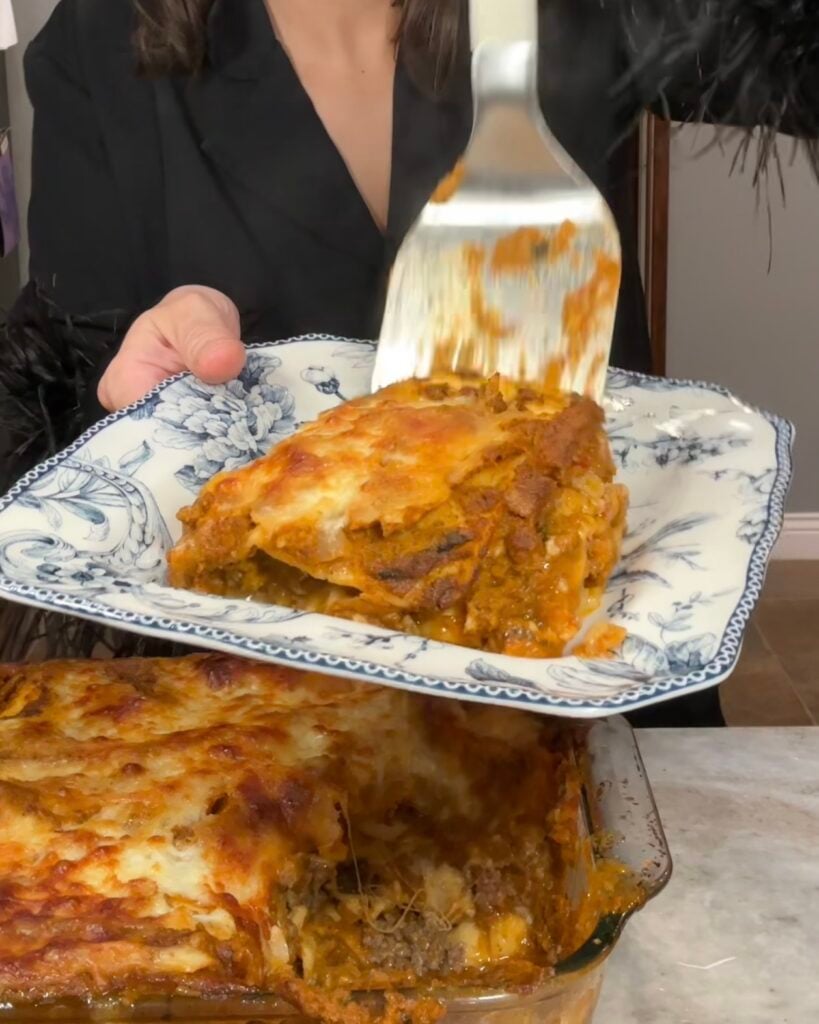
Let the lasagna rest for 15 minutes before slicing. This gives the layers time to settle so the slices hold together better.
Tips for a Lasagna That Isn’t Watery
Squeeze the spinach thoroughly. Thawed frozen spinach holds a surprising amount of water. Press it firmly in a fine-mesh strainer or squeeze it in a clean kitchen towel.
Cook off the vegetable liquid. Zucchini and frozen cauliflower release moisture as they cook. Leave the skillet uncovered at the end so that liquid can evaporate.
Blend only when the vegetables are tender. A blender can smooth out cooked vegetables much more easily than firm carrot or cauliflower pieces.
Check the sauce before layering. It should spread easily without being watery or stiff like a purée. Add extra marinara if it’s too thick, followed by a little water if needed. Oven-ready noodles need a looser sauce to soften properly, so avoid reducing it too much.
Give it time to rest. Cutting into the pan immediately can make even a well-prepared lasagna look loose.
Make-Ahead, Storage, and Reheating
To prepare ahead
You can assemble the lasagna up to one day ahead using cooled fillings. Cover and refrigerate promptly.
A refrigerated lasagna will need additional covered baking time. Check that the center reaches 165°F before serving. Follow your baking dish manufacturer’s instructions for moving a cold dish into a hot oven.
To refrigerate leftovers
Divide leftovers into shallow containers and refrigerate within two hours. Keep the refrigerator at 40°F or below, and use the lasagna within 3–4 days. You don’t need to leave the entire pan on the counter until it reaches room temperature.
To freeze
Once chilled, wrap individual portions well or place them in freezer-safe containers. Label with the date and aim to use within 2–3 months for best quality.
Thaw overnight in the refrigerator before reheating.
To reheat
Place a portion in a microwave-safe dish, cover loosely, and heat until the center reaches 165°F. For several portions, cover an oven-safe dish with foil and reheat at 350°F until heated through. Add a spoonful of water or sauce if the edges look dry.
Frequently Asked Questions
Yes. This recipe uses half a can of drained and rinsed cannellini beans blended with the cooked vegetables and some marinara. They add creaminess and help thicken the sauce without needing a separate ricotta filling.
Yes. Cook the cauliflower until very tender, and thaw and squeeze the spinach before adding it. Removing extra moisture is the most important step when using these frozen vegetables.
Yes. This recipe uses mozzarella-provolone and Parmesan between the layers. The blended beans and vegetables give the sauce body, so there’s no separate ricotta mixture.
Yes. This recipe is assembled with two noodle layers. It makes a shorter lasagna than one with three or four layers, but you still get noodles, beef, sauce, and cheese in each slice.
Cover it for the first part of baking to help the center heat without drying out the top. Remove the foil near the end so the cheese can finish melting and lightly brown.
Stir in additional marinara, about ¼ cup at a time, until you like the flavor and consistency. If it still needs thinning, add a little water. Spinach can darken the sauce, so using less or leaving it out will also help preserve more of the tomato color.
The beef and cheeses provide much of the protein, and the cannellini beans contribute additional plant protein. The amount per slice depends on your ingredients and how many portions you cut.
Hidden Veggie Lasagna Recipe
Video
Equipment
- Large skillet used for ground beef
- Large blue skillet used for vegetables
Ingredients
For the beef
- 1 tablespoon olive oil
- 1 small yellow onion finely diced
- 1 pound lean ground beef
- 3 garlic cloves minced
- ½ teaspoon Italian seasoning
- ¼ teaspoon salt
- ¼ teaspoon black pepper
For the hidden vegetable sauce
- 1 tablespoon olive oil
- 1 medium carrot peeled and finely chopped, about ½ cup
- 1 small zucchini chopped, about 1 cup
- 1 cup frozen cauliflower florets
- 4 ounces frozen chopped spinach weighed before thawing, then thawed and squeezed well
- 3/4 cup cannellini beans drained and rinsed
- 1 jar marinara sauce 24 ounces
- ½ teaspoon Italian seasoning
- Salt and pepper to taste
- Water only as needed for cooking or adjusting the sauce
For assembly
- 8-10 lasagna noodles Regular or oven-ready; use enough to cover the pan in two layers. Boil regular noodles until al dente; do not boil oven-ready noodles.
- 3 cups shredded mozzarella-provolone blend divided
- ½ cup grated Parmesan cheese divided
Instructions
- Prepare the oven and noodles. Preheat the oven to 375°F. Lightly grease a 9×13-inch baking dish. If using regular lasagna noodles, boil according to package directions until al dente, then drain and lay separately on a lightly oiled baking sheet. If using oven-ready noodles, skip boiling and check the package directions for any additional liquid needed in the sauce.
- Cook the beef. Heat 1 tablespoon olive oil in a large skillet over medium heat. Add the onion and cook for 4–5 minutes, until softened. Add the beef and cook, breaking it apart, until browned and cooked through to 160°F. Stir in the garlic, ½ teaspoon Italian seasoning, salt, and pepper during the final minute. Drain excess grease if needed and transfer the mixture to a bowl.
- Soften the vegetables. In the skillet, heat the remaining tablespoon of olive oil. Add the carrot and cook for 3–4 minutes. Add the zucchini and frozen cauliflower. Cover and cook for about 8–12 minutes, stirring occasionally, until the vegetables are very tender. Add a small splash of water only if needed to prevent sticking.
- Remove excess moisture. Uncover the skillet and cook until the excess liquid evaporates. Add the thawed, well-squeezed spinach and the remaining ½ teaspoon Italian seasoning. Cook for another 1–2 minutes.
- Blend the sauce. Add the cooked vegetables, cannellini beans, and about 1 cup of marinara to a blender. Blend until smooth, adding a little more marinara from the jar if needed to help it blend. Follow your blender’s directions for warm ingredients and work in batches if necessary. Alternatively, use an immersion blender in a deep saucepan.Pour the blended mixture into a saucepan and stir in the remaining marinara from the jar. If the sauce is too thick or you prefer more tomato flavor and a redder color, stir in extra marinara, ¼ cup at a time. Add water a tablespoon or two at a time if it still needs loosening. Taste and adjust the seasoning.The sauce should spread easily rather than hold its shape like a thick purée. For oven-ready noodles, keep it a little looser and follow the package directions for additional liquid. If you already blended in the entire jar, simply stir in extra marinara afterward as needed.
- Build the first layer. Spread about ¾ cup of the blended sauce over the bottom of the prepared baking dish. Arrange enough noodles to cover the base, trimming to fit if necessary. Add half the beef, half the remaining sauce, 1½ cups mozzarella-provolone, and ¼ cup Parmesan.
- Build the remaining layers. Add another layer of noodles, beef, sauce, mozzarella-provolone, and Parmesan. If you have enough ingredients for more than two layers, continue layering, reserving enough sauce and cheese for the top. Finish with a layer of noodles completely covered with sauce and cheese, making sure no noodle edges are exposed.
- Bake. Cover with foil, tenting it away from the cheese. Bake for 35–40 minutes. Uncover and bake for another 10–15 minutes, until bubbling and the center reaches 165°F.
- Rest and serve. Let the lasagna rest for 15 minutes, then cut into 8 portions.
Notes
- Noodles: This version uses regular noodles that are boiled before assembly. Oven-ready noodles require adjustments to moisture and cooking time.
- Frozen vegetables: Squeeze the spinach well and cook off the liquid released by the zucchini and cauliflower.
- Cheese: Plain shredded mozzarella can replace the mozzarella-provolone blend.
- Layers: This recipe intentionally uses two noodle layers and finishes with sauce and cheese.
- Storage: Refrigerate promptly in shallow containers and use within 3–4 days. Freeze portions for 2–3 months for best quality.
Nutrition
More Dinner Recipes
If you make this hidden veggie lasagna, leave a rating and a comment below. I’d love to hear how it turned out.