
One of the most common questions I get as a Registered Dietitian Nutritionist is how to choose the best breastfeeding friendly protein powder. Whether you’re a new mom or have been nursing for a while, it can feel overwhelming knowing what to eat, what to avoid, and whether you need extra calories to support both your health and your baby’s growth.
This blog post will cover the best protein powders for breastfeeding moms, the nutritional needs of lactating mothers, and answer common questions about breastfeeding, nutrition, and postpartum wellness. You’ll also learn how to use protein powders to help sustain body weight, boost energy levels, and support your gut microbiome naturally.
Always check with your lactation consultant before introducing protein supplements, as your medical history and nutrition needs matter.
Disclaimer: While all recommendations here are considered safe protein powders (per national dietary guidelines), pregnant women and breastfeeding mothers should consult with their doctor or midwife before adding supplements into their routine. This post may contain affiliate links.

As you may know, breastfeeding has many nutritional benefits that will promote your child’s health and growth. However, it also takes a toll on the mother’s nutritional stores and energy.
Just like when you are pregnant, you also need to focus on eating a nutrient-dense diet and adding extra snacks to promote milk production.
This means eating enough protein and other essential vitamins and minerals to ensure you are providing yourself and your baby enough nutrients for you to sustain your breast milk supply.
Protein helps repair tissues and maintain muscle mass, which is crucial for postpartum recovery. Vitamins like B12 and minerals like calcium support both mom and baby’s health, aiding in energy production and bone strength.
Not to mention, when you are breastfeeding, cravings and hunger are at an all-time high. For many breastfeeding moms, a high-protein diet is a good solution. This is where protein powder comes in.
However, not all protein powders are created equal. So in this blog post, I will be sharing my top picks based on the nutrition label and clean ingredients.
The Benefits of Protein for Breastfeeding Moms
Just like when you are pregnant, you also need to focus on eating nutritious foods and superfoods to promote milk production and provide essential nutrients for your baby.
Not only will protein help build muscle, it also has beneficial properties for breastfeeding mothers.
Protein boosts your metabolism, aids in recovery after the birth process, strengthens connective tissues, reduces hunger levels, provides extra calories in your daily diet, curbs sugar cravings, boosts energy levels, lowers blood pressure, and improves the quality of breast milk.
How Much Protein Should You Have While Breastfeeding?
During lactation or breastfeeding, you must eat an adequate amount of protein in order to maintain your own muscle mass, while also providing enough nutrition to the infant through breast milk.
The current Dietary Reference Intakes (DRI) for protein suggest that healthy lactating women should consume an Estimated Average Requirement (EAR) of 1.52 grams of protein per kilogram. This comes out to be approximately 17 grams of extra protein per day during the first six months of breastfeeding.
Is Protein Powder Safe During Breastfeeding?
For the most part, protein powder is very safe for breastfeeding moms. Making sure you are reading the nutrition label and choosing the right one is where it can get a little tricky.
This is because what you eat can get transferred through the milk to your baby. Therefore, making sure you are choosing a protein powder without artificial sweeteners and other additives, like heavy metals, is important.
Even though protein powder can be a good option to increase protein intake, it is not recommended that protein shakes become a meal replacement in a regular diet.
Some protein powders may also include xanthan gum or artificial flavors, which can affect taste. Look for clean protein powders or collagen supplements with simple, whole ingredients.
Does Protein Powder Increase Milk Supply?
Some protein powder is specifically made for breastfeeding moms. These are called lactation protein powder or breastfeeding protein powder.
These specific breastfeeding protein powders are said to increase milk supply because of the added ingredients that have been shown to help increase supply, like fenugreek.
However, to answer the question as to whether or not protein powder increases milk supply, the short answer is no, not directly.
A mom’s milk supply increases with overall adequate caloric intake, proper nutrition coming from a healthy diet and drinking lots of water. A protein powder can help increase protein and caloric intake in an easy, convenient way, but protein powder in itself does not increase milk supply.
At the end of the day, drinking extra water and making sure you are eating enough nutrients is one of the best ways to increase and sustain your milk supply.
What to Look for in a Protein Powder While Breastfeeding
Protein powders are not regulated by the Food and Drug Administration (FDA), just like all other supplements. This means there is no strict set of rules or guidelines about what’s in them.
While the FDA does get involved when there is a complaint, it is mostly the manufacturer’s job to properly evaluate their products and be transparent with their labeling, which doesn’t always happen.
So the first thing I suggest doing when choosing a protein powder is to choose one that is third-party tested.
Getting a third-party certification means that an independent organization, that is not involved in the product, has reviewed the manufacturing process and determined that the final product complies with specific standards for safety, quality or performance.
More things to look for in a protein powder
Any lactation supplement that is being added into your diet should contain the following ingredients: whole, natural ingredients, vitamins, and minerals.
Natural ingredients and whole foods help reduce artificial ingredients. Vitamins such as vitamin A, vitamin C, and vitamin B12, a vitamin B complex including folate, are very helpful for new moms. And they are found in many protein powders specifically for new moms. Important minerals for breastfeeding moms include iron, calcium, and potassium. Most protein powders likely have some combination of these three minerals.
Whey protein powder VS plant-based protein powders
Whey protein is made from cow’s milk meaning it is a complete protein and has all 9 essential amino acids. This type of protein is great for building muscle as it has BCAAs (branch chain amino acids).
Plant-based proteins are another good choice if you are lactose intolerant and prefer dairy-free.
However, it is not a complete protein on its own. Some manufacturers will add different plant proteins (like pea protein powders for breastfeeding moms) together to create a complete protein.
In other words, whey protein from grass fed cows provides a complete amino acid profile, while some plant-based proteins may include soy or added herbs for additional benefits.
How to Incorporate Protein Powder into Your Diet
If you prefer protein supplements, a single scoop can be added to smoothies or your snack, providing extra energy without the caffeine found in some other supplements.
Protein powder is a great addition for extra protein, but should not be used in replacement of a meal.
And if you are like me and prefer to use it occasionally, here are some protein sources from whole foods:
- Meats like turkey, fish, chicken, and beef
- Dairy sources like Greek yogurt, cheese and milk
- Legumes like beans, chickpeas, and lentils
- Nuts like almonds, cashews, and walnuts
- Tofu
- Eggs
- Whole grains
- Quinoa
Do I Need Extra Calories While Breastfeeding?
According to general nutritional guidelines, nursing moms need about 500 calories more per day than their usual food intake.
This is because you use more energy (aka calories) to produce milk. In order to provide your body with the energy and nutrition to produce milk, you do need to increase your caloric intake by about 500 calories.
A Dietitian’s take on weight loss while breastfeeding
Here’s some honesty: I do not advocate for moms to try and lose weight while nursing, if they can avoid it.
Moms have enough external pressure on their shoulders, and they do not need to add more to it by following unrealistic societal expectations.
Adding extra stressors, like weight loss, shortly after giving birth can hinder postpartum mental health and recovery.
But, since I often do get asked about safe weight loss while breastfeeding, let’s talk about it.
How to Lose Baby Weight While Breastfeeding
Even though many will tell you that one of the best ways to lose weight postpartum is to breastfeed, this is actually very controversial.
While some studies have shown that women who breastfeed tend to lose more weight postpartum than women who don’t, other studies have shown no clear association between breastfeeding and weight loss.
If you are breastfeeding and having a hard time losing weight, then there are a few things you can do without going on a fad diet and impacting your milk supply.
Tip #1: Build healthy meals
First thing you can do is make sure your meals are well balanced. This means adding in protein, healthy fats, fiber and lots of plants into your meals.
And since we are talking about protein shakes and protein powders in this blog post, make sure to check out this balanced protein smoothie recipe.
Smoothies and shakes is one of the easiest meals you can incorporate a serving of protein powder.
Protein has been shown to reduce your hunger hormone, ghrelin, whereas fiber and healthy fats slow down digestion and helps keep you full for longer.
Tip #2: Get as much sleep as you can
Before you roll your eyes, I get it. It is SO hard to get enough sleep with a newborn or any kids for that matter.
However, sleep deprivation is associated with an increase in appetite and the stress hormone, cortisol, which can result in weight gain and weight retention.
I know this is easier said than done, but those dishes and that load of laundry can wait. If you are tired and can use a nap, then take the nap. Your mental health is more important and that extra 15 minutes of sleep can make you even more productive and energized later on in the day.
Tip #3: Be kind with yourself
No matter what your postpartum weight loss goals are, practice self care first and foremost. You just had a baby. Take it slow. Focus on healthy lifestyle behaviors versus punishing yourself to fit into your pre-baby jeans.
Let go of self-induced pressure to hit a specific number on the scale and focus instead on other more important health markers like your energy, sleep, mood, stress levels, and a healthy diet.
Top 10 Protein Powders for Breastfeeding Moms
Ritual Essential Protein

This daily shake is designed specifically for pregnancy and postpartum women to provide their bodies with the nutrients that they need throughout pregnancy, recovery, and lactation.
Ritual Daily shake for pregnancy and postpartum women is full of vitamins and minerals that help women to meet their nutritional demands. Not only does it help with boosting nutrition, this protein powder can help to build lean muscle mass and retain bone density.
This is one of the few lactation protein powders that is third party tested meaning their products are safe, nutritious, and up to industry standards.
Vital Proteins Collagen Peptides

Vital Proteins Collagen Peptides is a collagen supplement with a mild vanilla taste that can boost energy and support overall wellness.
I love this option because it contains 20 grams of protein and it is a great supplement in a new moms daily diet. It can also be found easily in any major grocery store.
Garden of life grass-fed collagen protein

Another safe option for a breastfeeding mama, Garden of Life has an impressive nutritional profile with the essential amino acids, and probiotics. The main protein ingredient is organic pea protein.
Naked Whey

Naked whey is an excellent option as a protein powder that uses simple ingredients. With only three ingredients; whey, vanilla, and coconut sugar it is packed full of amino acids due to whey being the main ingredient.
Boobie Body Lactation Protein powder

This nourishing lactation protein powder is made specifically for the breastfeeding mother and is made to meet her nutritional needs. Boobie Body has 6g of fiber and has a great source of vitamin D and iron. The main ingredient is organic pea protein sweetened with monk fruit extract and stevia. If you want a vegan protein powder this might be the option for you.
Orgain Organic Protein

Orgain is a brand that has a great selection of protein powder options. It includes whey-based protein powders, plant-based protein powders, and protein shakes. This protein powder is affordable and uses high-quality, simple ingredients. It also is a good source of vitamin B6, vitamin C, iron, riboflavin, thiamin, and pantothenic acid.
Ora Organics So lean and so clean

Another vegan protein powder is Ora Organics so lean and so clean.
This protein powder is an effective way to add more produce and protein to your diet. This plant-based protein powder blends superfoods like kale, acai, and blueberries for a tasty, nutrient-dense protein boost.
This protein powder also uses pea protein and includes digestive enzymes to help break down the plant protein. This helps eliminate bloating while maximizing absorption.
Milk Dust Breastfeeding Protein Powder

Marketed specifically as a lactation protein powder, Milk Dust is vegan and uses organic ingredients. This vanilla-flavored protein powder is also great source of folate, vitamin B12, and iron.
Pink Stork Pregnancy and Nursing Protein
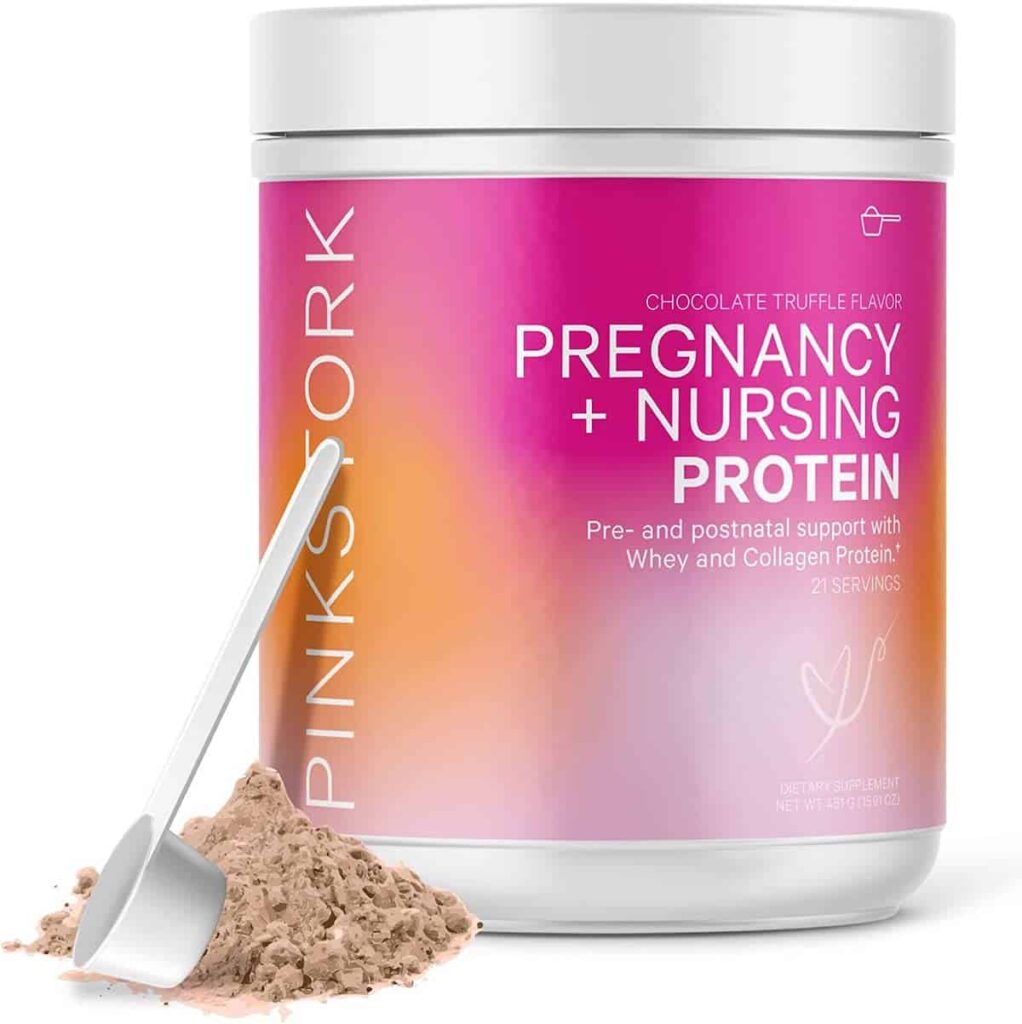
Pink Stork Pregnancy and Nursing protein powder is simple and contains all of the essential ingredients new moms need. It contains collagen whey protein and calcium to aid in recovery. Added benefits include joint repair and aids in strengthening hair, skin, and nails.
Baby Blues Milky Whey Protein Powder
✔️ Specifically formulated for breastfeeding moms with lactation‑focused ingredients like oats, flaxseed, and brewer’s yeast.
✔️ Delivers essential vitamins and minerals that support both you and your baby’s nutritional needs.
✔️ Praised for its taste and smooth texture, making it easy to mix in smoothies, shakes, or snacks during busy days.
A Dietitian’s Top Pick for Breastfeeding-Friendly Protein Powder
If I had to highlight one protein powder for breastfeeding moms, Naked Whey is my top choice. It’s a complete protein with all nine essential amino acids, making it ideal for postpartum recovery, muscle repair, and maintaining energy.
It uses only three simple ingredients—whey, vanilla, and coconut sugar—so you avoid unnecessary additives. Plus, it’s third-party tested, which gives peace of mind that it’s safe and high quality for breastfeeding moms. A single scoop can be added to smoothies, oatmeal, or snacks for an easy protein boost without impacting milk supply.
FAQ: Breastfeeding Friendly Protein Powder
Safe protein powders for breastfeeding moms are those with clean, whole ingredients, no artificial sweeteners, and ideally third-party tested. Options include whey from grass-fed cows, plant-based blends like pea or soy protein, and specialized lactation protein powders.
Postpartum moms benefit from protein powders with complete amino acid profiles and added vitamins and minerals to support recovery, energy, and milk production. Collagen supplements and blends containing superfoods can also help with tissue repair and gut health.
Protein powders themselves do not directly increase milk supply, but they help ensure adequate protein and calorie intake, which supports overall lactation. Make sure to stay hydrated and maintain a balanced diet alongside supplementation.
Some babies may react to certain proteins, such as whey or soy. Start with small servings and observe your baby. Plant-based proteins like pea protein or lactation-specific powders are usually well tolerated.
Yes! Protein shakes made with clean ingredients are safe and convenient. Combine a scoop of protein powder with milk or a milk alternative and fruits like banana or berries for extra energy and nutrients.
Avoid supplements with high doses of caffeine, artificial additives, or certain herbal blends not approved by a lactation consultant. Always consult your medical provider if you have any questions about your medical history.
The 4-4-4 rule refers to breastfeeding guidelines: every 4 hours, 4-6 ounces per session, for 4 weeks, helping establish a consistent feeding schedule. Variations like the 3-3-3 rule are also common.
Collagen supplements are generally safe, especially if sourced from grass-fed cows or clean, plant-based ingredients. They help support joint health, tissue repair, and skin elasticity postpartum.
One scoop per day is generally sufficient for most breastfeeding moms, but always follow product instructions and consider your protein needs and calorie intake.
Bottom line
Using protein powders can be a great way and a safe option to increase your daily protein intake while sustaining a healthy milk supply. Just be sure to read the ingredient list and look for ones that use whole ingredients.
Incorporating protein supplements can also help sustain energy, support your gut microbiome, and ensure you’re meeting your protein needs as a breastfeeding mom.
Depending on which you prefer, you can choose powders with plant-based proteins or ones with dairy products like whey. Protein plays an important role as it is the building block of the body. It helps the body repair and recover after birth. While individual protein needs vary, most moms need an extra 15 to 25 grams of protein per day while breastfeeding. Some researchers have claimed breastfeeding moms need even more than that. Therefore, choosing one with a complete amino acid profile while having essential nutrients is an easy way to boost your intake of protein. Especially for busy moms.
Having said all this, I do not believe that buying a protein powder is essential. You can get enough protein from the food you eat by adding more protein-rich foods into your diet and increasing protein portion sizes.